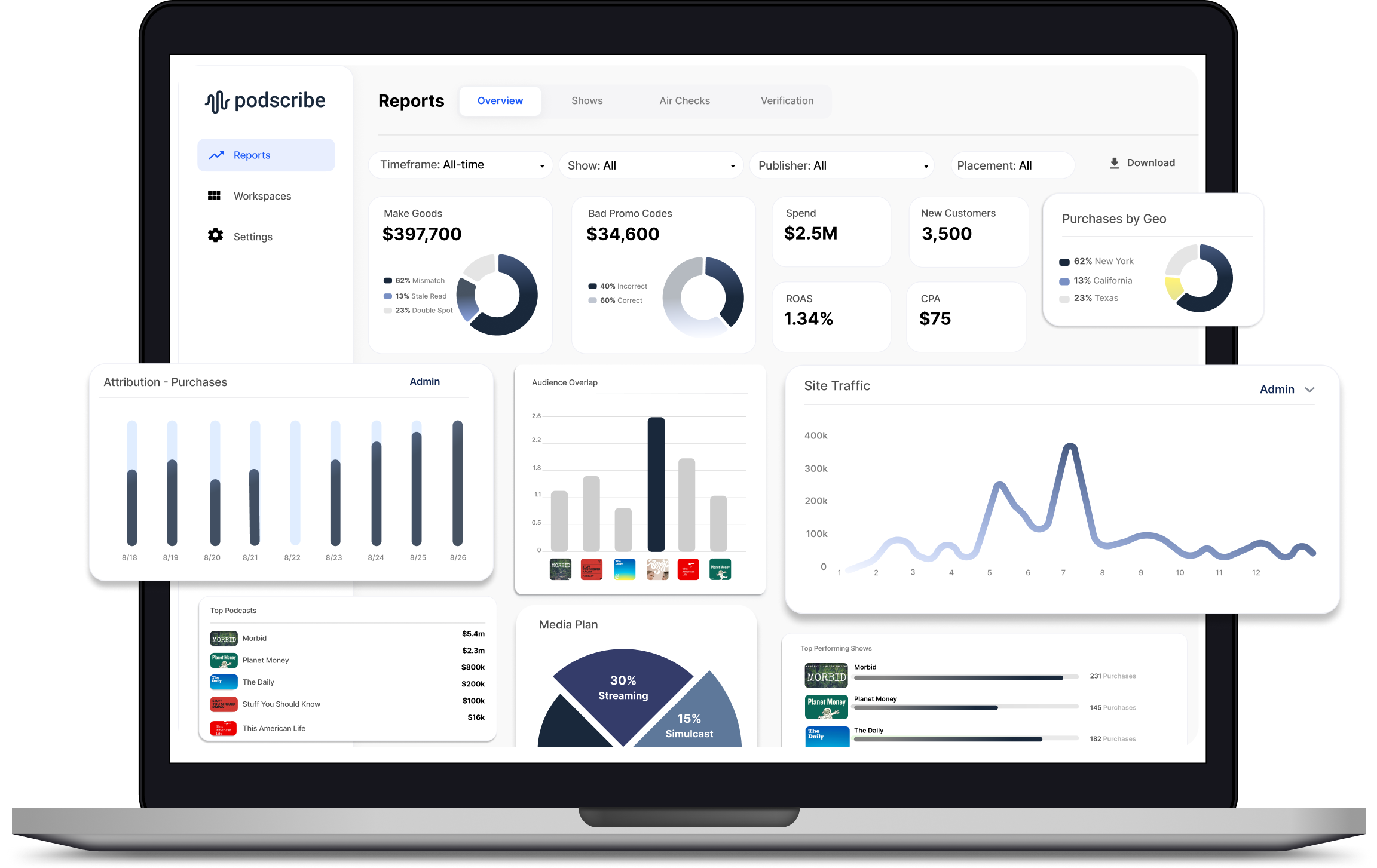


Your podcast ads are driving in-store and online sales you can't see yet. Let's fix that.
Most podcast listeners buy things in the real world. In fact, 81.5% of U.S. retail sales still happen in physical stores, so pixel tracking is not enough. Podscribe combines in-store sales and online sales to give you the full picture.
Trusted by the Largest Brands, Agencies, and Publishers



























Here's how one CPG brand uncovered $1.3M in podcast-driven offline sales that almost went unattributed.
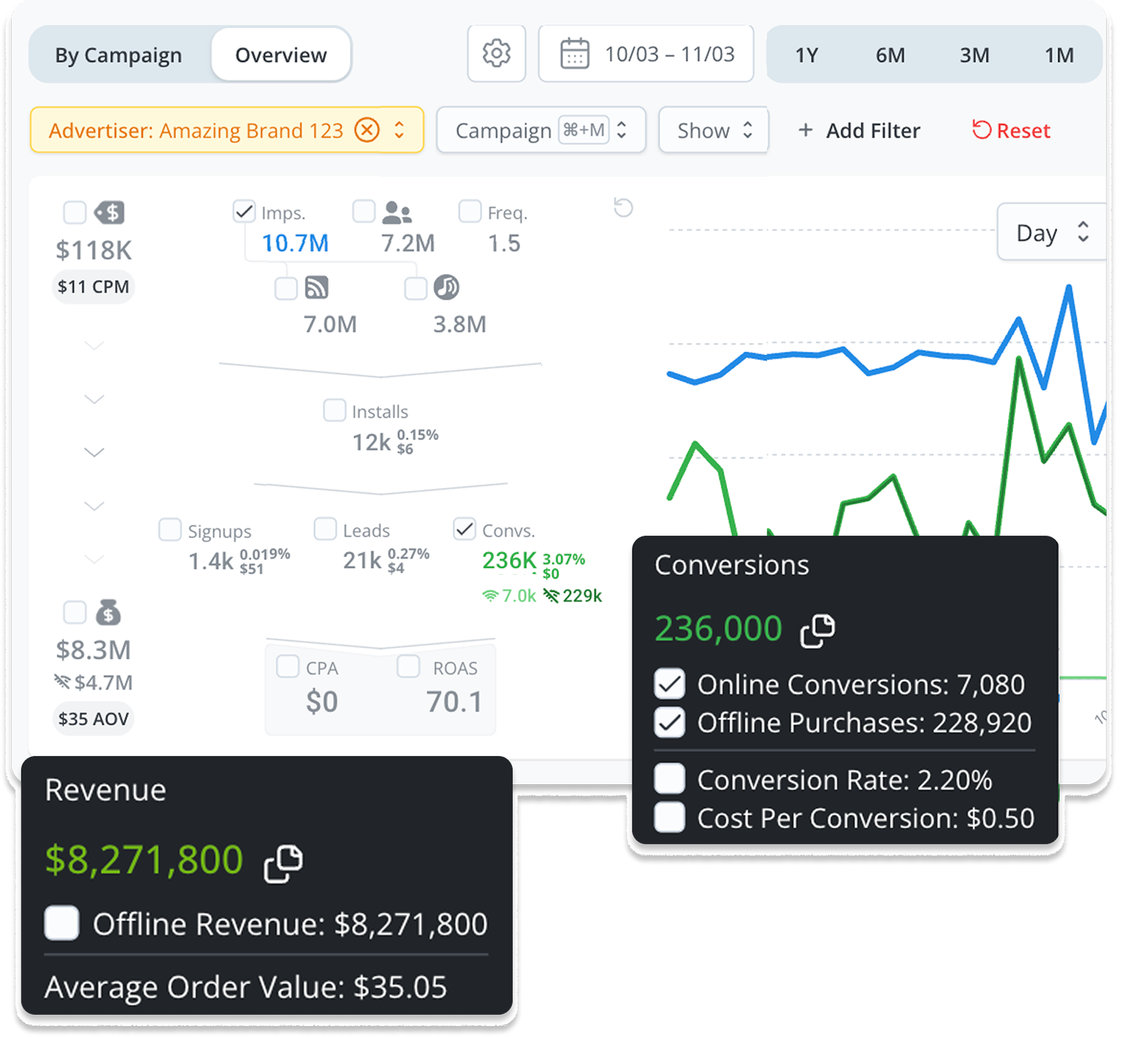
2,000+
Online Conversions
91,000+
Offline Conversions
$ 1.3M+
Offline Revenue
$ 2.22
Blended CPA
You're running audio campaigns, and listeners seem to be responding. But when it comes to proving ROI, the data just isn't there.
Here's why your current setup is leaving money on the table.
Why Most Podcast Attribution Stops at the Browser
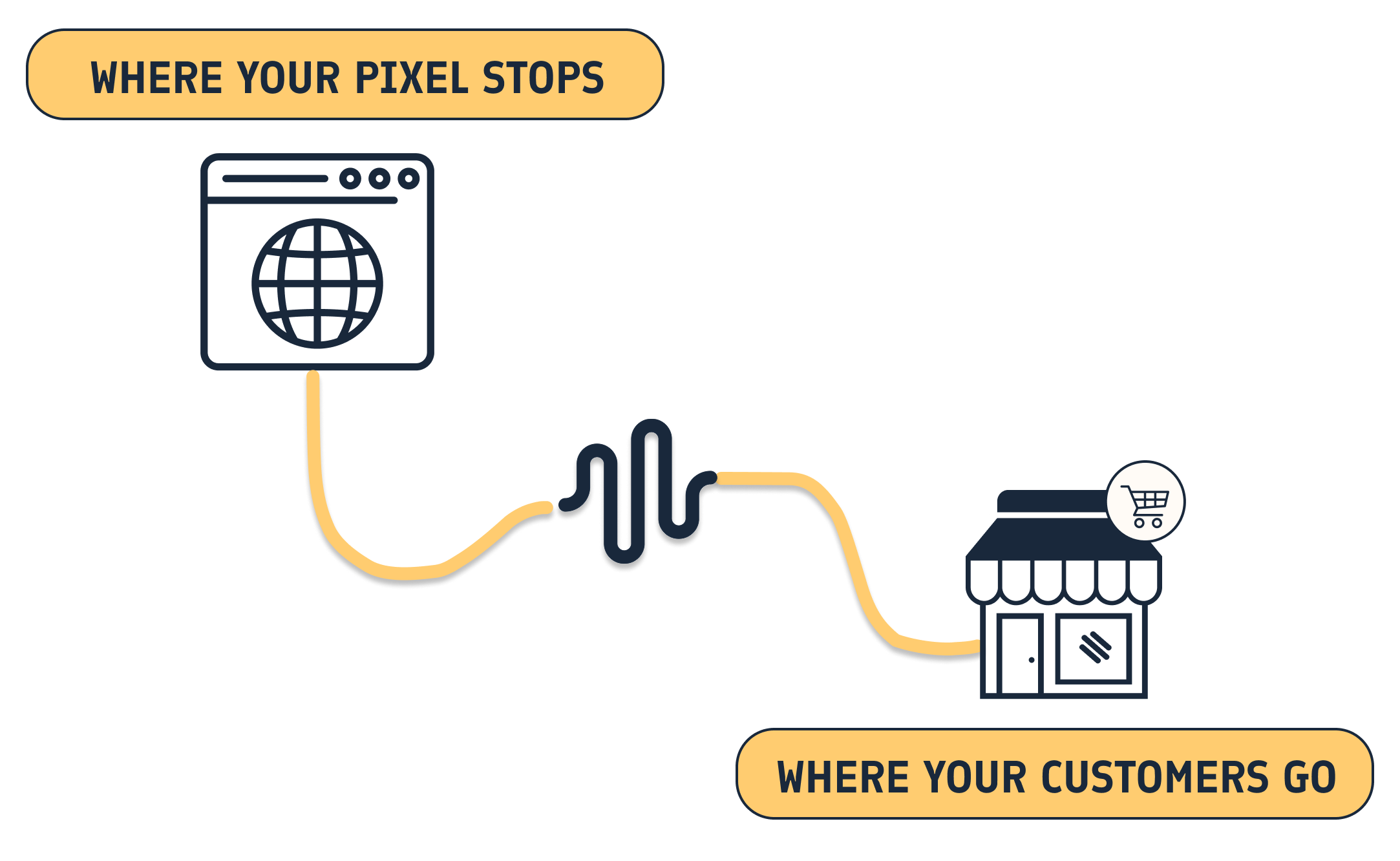
1. In-Store Purchases Are Elusive to Standard Pixels
A listener hears your ad on a podcast, walks into a store, and buys your product. Standard pixel-based attribution hardly ever sees that conversion.
But if 81.5% of retail sales happen in-store, you're attributing your podcast ads based on less than 20% of where your customers actually buy. For CPG brands, DTC brands with physical retail, and omnichannel advertisers, this is a significant blind spot.
2. Online Attribution Misses the Full Sales Cycle
For brands with longer purchase journeys, a single-session pixel doesn't capture the full path. Phone calls, store visits, and CRM-matched purchases all fall outside the picture. You're measuring a fraction of what your ads actually drive.
3. Budget Decisions Get Based on Incomplete Data
When offline outcomes aren't measured, podcast advertising gets systematically undervalued, and budgets get cut. Not because the channel underperforms, but because the data can't prove it performs.
And when the data you do have comes from publisher-reported delivery metrics without independent, third-party verification, you're not just missing offline impact, you’re simply optimizing on surface-level data. That's not a performance problem. It's a measurement problem.
See how brands are closing the offline attribution gap.
Offline Conversion Tracking That Goes Where Your Customers Go
Podscribe's offline conversion tracking connects podcast ad exposure to verified in-store purchases, retail transactions, and CRM-matched conversions.
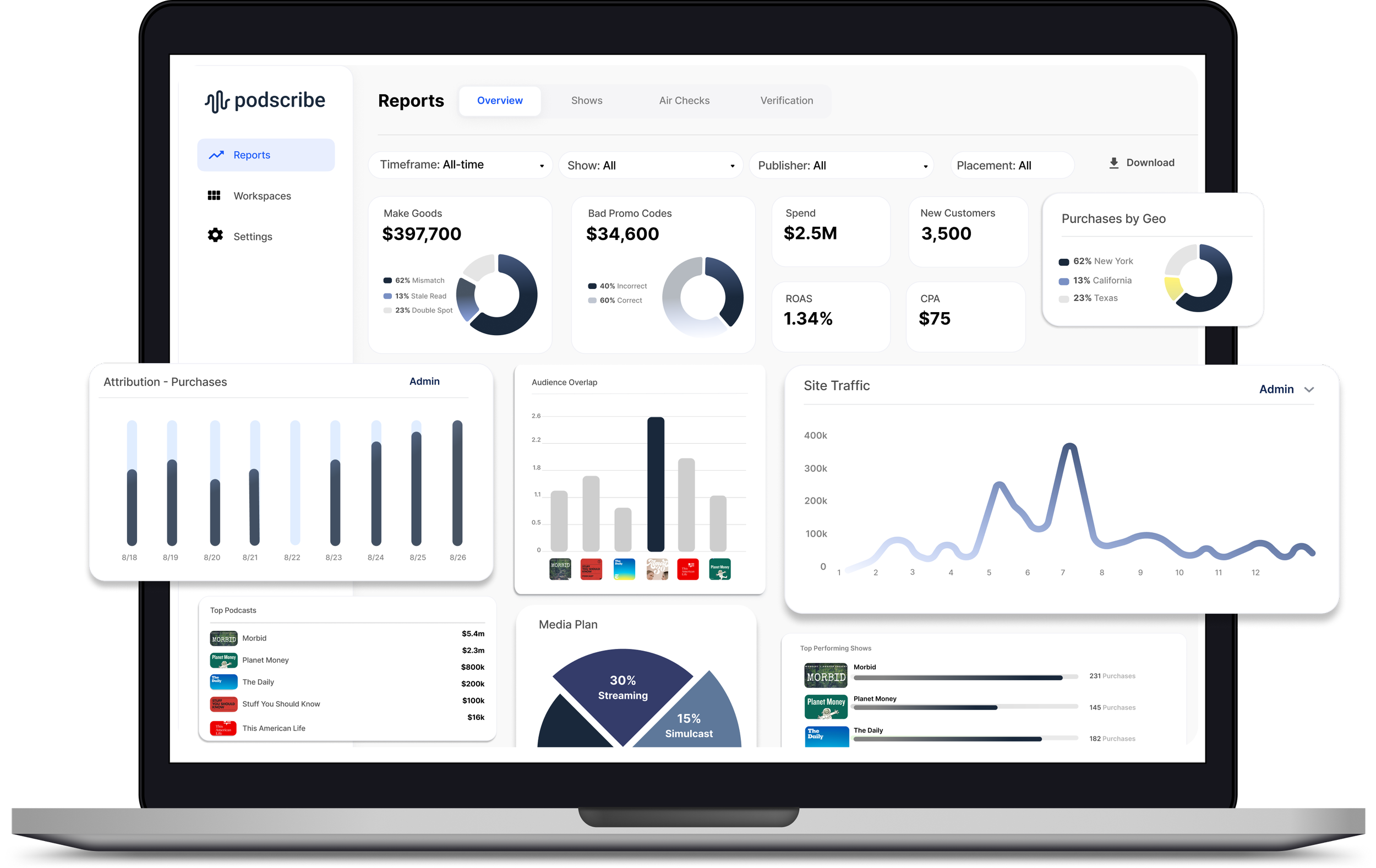
Do it all inside the same Podscribe dashboard you already use for podcast attribution and audio ad measurement. No extra logins, no separate reporting views, no manual exports.

Closes the Measurement Gap
Stop underreporting what your audio campaigns actually drive. No more blind spots between your podcast ads and in-store sales.
Deterministic and Probabilistic Matching
Use hashed emails (HEMs), device graphs, and transaction data to tie real-world purchases back to the exact ad that drove them.
Works Across Every Channel
Whether a customer buys online, in-store, or through a third-party retailer, Podscribe connects online ad exposure to offline sales events and brings it all into one unified view.
How Podscribe Tracks Offline Conversions
Podscribe directly integrates with leading 3rd party sales data providers, for foot traffic, CPG, and retailer insights to give you the most complete picture of the impact your podcast and streaming audio campaigns are actually driving.
For CPG Brands and Retail Sell-Through
Our partner provides verified, first-party retail purchase data across 330+ retailers using receipt uploads and rewards programs.
Podscribe matches that data to podcast ad exposure using HEMs, MAIDs, and IP signals, enabling accurate ROAS calculation even when you don't own the point of sale.
Best for:
- CPG brands selling through third-party retailers
- Brands without direct access to POS or transaction data
- Advertisers who want to reduce over-reliance on proxy metrics like form fills
For Brick-and-Mortar and Enterprise Advertisers: Credit Card Transaction Data
Access to credit card transaction datasets through our market intelligence partner lets Podscribe measure in-store purchases at scale using anonymized panels covering 86B+ verified credit and debit card transactions across over 5K+ retail brands.
Purchases get matched at the brand and store level, providing a single source of truth across online and offline channels.
Best for:
- Retail brands with physical store footprints
- Enterprise advertisers seeking broad market coverage
- Brands without direct POS integrations
For Location-Based Attribution
Our location-based analytics partner captures MAIDs when consumers enter a geofenced area via SDK integrations with location-based apps. Those MAIDs get sent to Podscribe, matched to households in its identity graph, and attributed back to the ad impression.
Data pulls from millions of daily active users on iOS and Android who've granted location permissions in-app.
Best for:
- Brands with physical retail locations
- Advertisers running podcast campaigns alongside OOH or broadcast
- Brands that want foot traffic tied directly to audio ad exposure
For Subscription and High-LTV Brands: CRM Data Matching
Podscribe supports ingestion of hashed emails (HEMs) directly from your CRM, CDP, or data warehouse.
This enables deterministic matching between your customer records and Podscribe's ad exposure graph, so you can attribute conversions that occur entirely outside the browser.
Best for:
- Brands with strong first-party data (subscriptions, loyalty programs)
- Subscription, fintech, healthcare, or high-LTV brands
- Advertisers who need deterministic attribution without relying on cookies or pixels
Which Brands is This Built for?
If your customers buy somewhere other than your website, standard pixels miss those conversions.
Here's how Podscribe solves this through its partners:
CPG brands at grocery and mass retailers
CASE STUDY: A pet food brand using this attribution model connected $1.3M+ in offline retail revenue to their audio campaigns. See how →
Brick-and-mortar and offline credit card spend
Brands with physical locations
You need an audio attribution measurement tool you can stand behind. Here's what makes Podscribe different.
Why Advertisers Trust Podscribe for Offline Attribution
Independent & Unbiased

Podscribe is a fully independent third-party measurement provider. Your attribution data isn't influenced by publishers, networks, or platforms with a stake in the outcome.
IAB-Certified Measurement
Podscribe is the only IAB-certified third-party attribution provider for podcast ad measurement and streaming audio advertising. Your measurement meets the industry's highest standards for accuracy and transparency.
Privacy-Safe by Design
All offline attribution runs through privacy-safe data matching using hashed first-party identifiers. No raw PII. No cookie matching. Fully opt-in and compliant across every data source.
One Dashboard for Everything
Podscribe enables cross-channel attribution by importing offline events alongside digital conversion data, all inside the same dashboard. No switching between tools. No manual exports required (though exports are always available if needed).
Not ready for a demo? Start with the data.
Podscribe publishes the industry's most detailed quarterly benchmarks with performance data across industries, buy types, and creative formats.
Get Started in 4 Simple Steps
Step 1: Pick Your Data Source
Choose between our 3rd party data partners or direct HEM ingestion. Start with one and layer in others as needed.
Step 2: Map Your Conversion Events
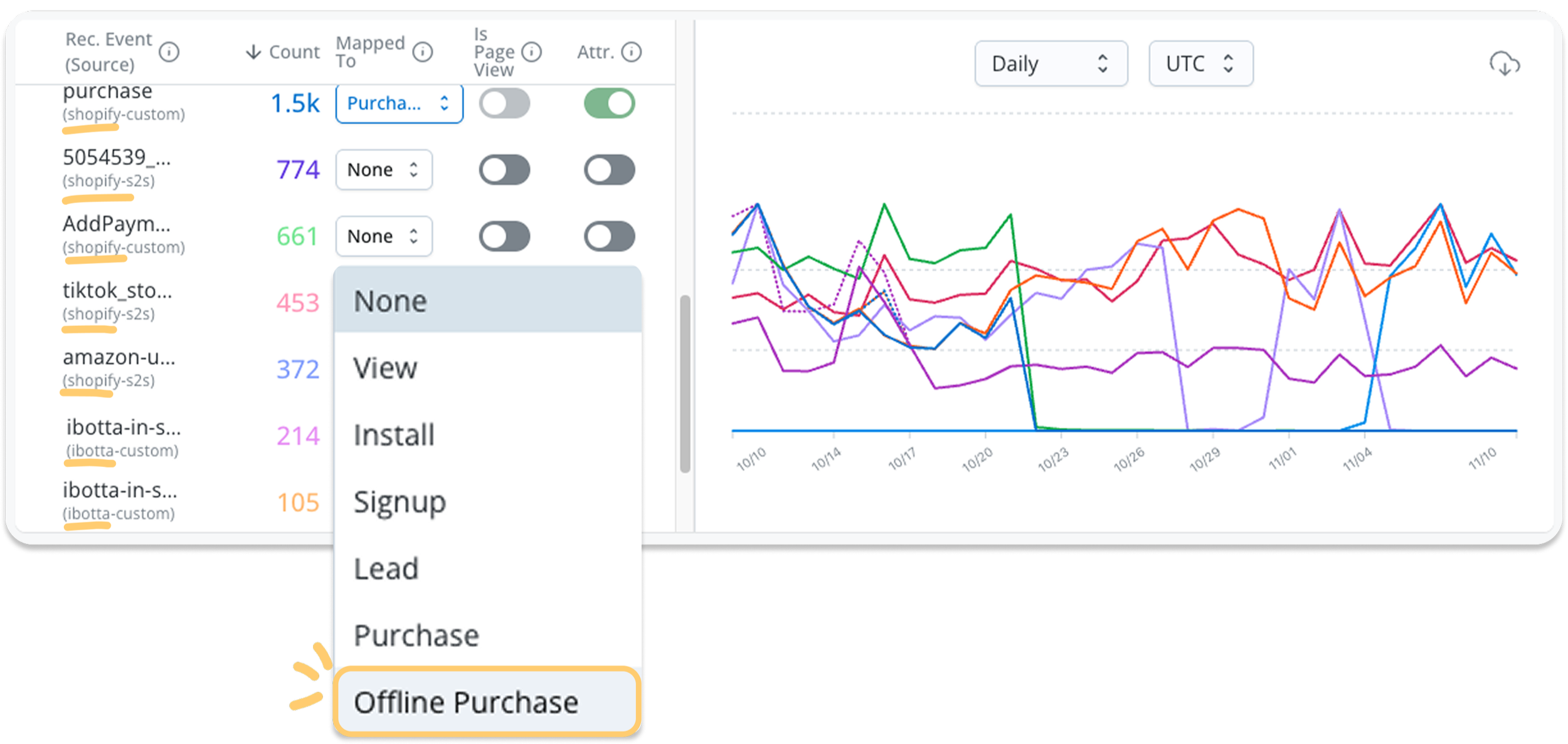
Inside your dashboard, map in-store and offline purchase events alongside your online conversions.
Step 3: Set Your Attribution Window
Configure your lookback window to match your sales cycle.
Step 4: See It All In One Place
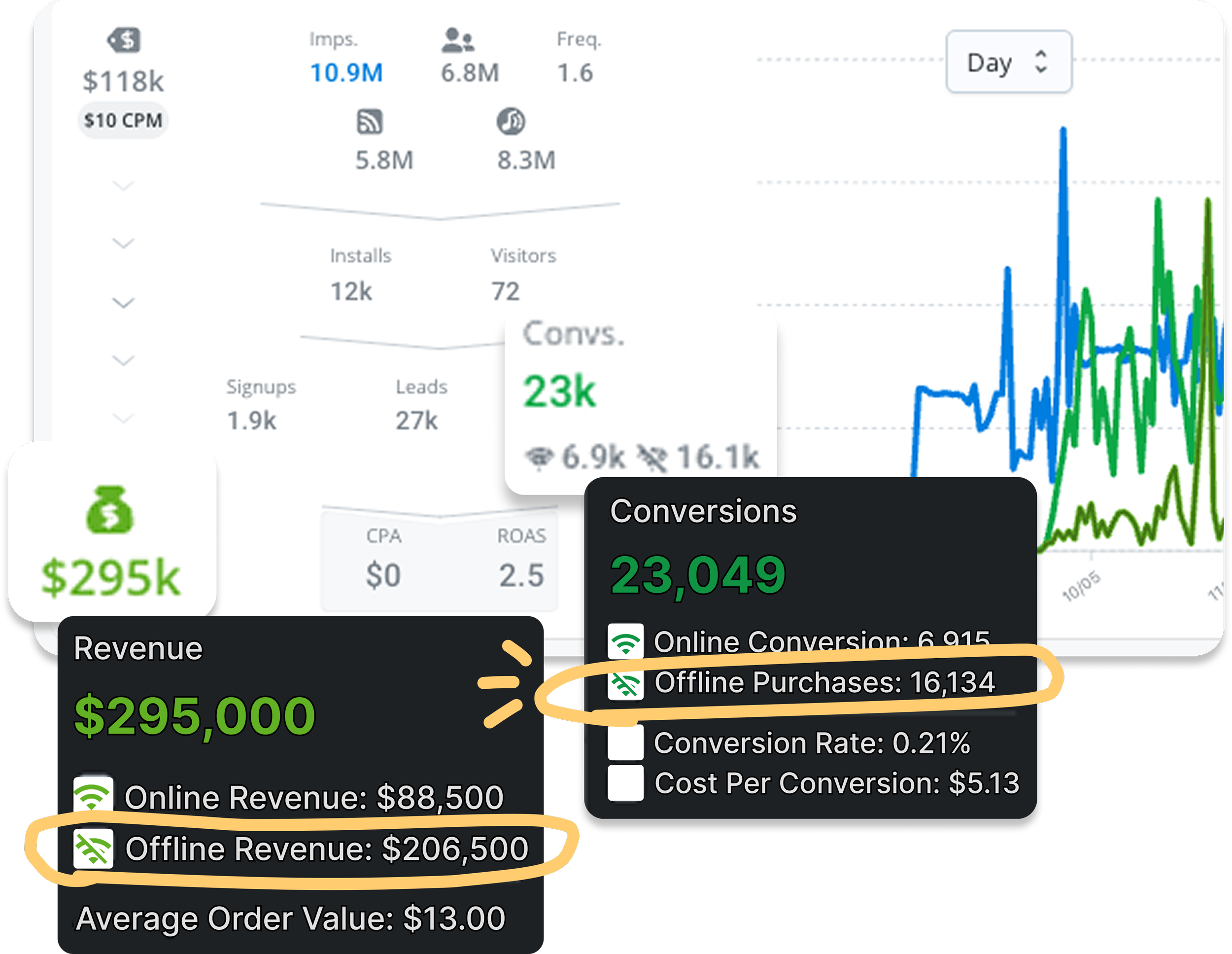
Watch online and offline conversions populate side by side in real time.
Need help with setup? Reach out to us at partnerships@podscribe.com or simply book a demo.
Frequently Asked Questions
What is offline conversion tracking in podcast advertising?
How does Podscribe match offline purchases to podcast ad exposure?
Do I need a separate tool to track offline conversions on Podscribe?
What types of offline conversions can Podscribe measure?
How long does it take to set up offline conversion tracking?
Start Measuring the Revenue You're Missing.
Your podcast campaigns are driving real-world sales. Podscribe gives you the data to prove it and the confidence to scale.
Get attribution that follows your customers all the way to the purchase for both online and in-store sales to give you the full picture.