

Radio As A Performance Channel: Modern Radio Attribution
Podscribe partnered with Right Side Up to bring modern measurement to radio, proving it can perform alongside podcast and streaming audio, and validating the results against Media Mix Modeling (MMM).


Radio has long been one of the most influential channels available to advertisers, but it had never had access to the level of performance measurement already provided in digital and audio. That gap was the opportunity Podscribe set out to close.
Podscribe gives performance marketers what pixel-based attribution gives them in podcasting: weekly reporting, show-level insight, and fast optimization cycles.
Right Side Up, a growth marketing partner with deep expertise in offline media, worked with data-centric advertiser clients in fintech and SMB software who needed a solution for verifying and measuring their radio advertisements. Its clients trusted that standard for podcast and streaming audio, but radio couldn't meet it, so radio kept losing budget to channels that were easier to defend.
Campaign Snapshot
Industry: Mutli-Advertisers (Fintech and SMB software)
Product/Service Overview: Performance marketing efforts spanning podcast, streaming audio, satellite radio, and terrestrial radio, managed by Right Side Up on behalf of its advertiser clients
Customer Profile: Performance marketing and media buying teams held to strict CPL, CPP, and ROAS targets, reporting into leadership that expects decision-grade data
Target Audience: Advertisers' own end customers. Consumers and small businesses reached via news/talk, sports, and music radio formats across national and local (DMA-level) markets
The Challenge
For radio advertisers, the channel has always delivered reach and influence. What it hasn't delivered is performance proof. Working with Right Side Up's advertisers, Podscribe identified the same core measurement gaps showing up again and again:
Reporting was too slow to act on. Traditional radio readouts took four weeks to four months to "fully bake," delaying optimization and making testing expensive, causing teams to often move budget away before a fair verdict was in.
Legacy tracking undercounted radio's real impact. Promo codes, unique URLs, and call tracking missed in-car listeners who remembered the brand but converted later through search or another channel. This masked radio's true contribution to CPL, CPP, and ROAS.
Ambiguous attribution bred internal skepticism. Teams could see lifts in branded search or site traffic, but without a rigorous system tying those lifts to radio, they were routinely written off as noise from other channels.
What Right Side Up's advertisers needed was a solution that made radio look and feel as modern as podcast and streaming attribution with the spike-based rigor of TV measurement and reporting they could act on every week.
Podscribe’s Solution
Podscribe developed and operationalized a radio attribution framework, in partnership with Right Side Up, built to meet performance-marketing standards. The goal wasn't just to prove radio "worked". It was to make radio measurable, comparable, and optimizable alongside every other channel in Podscribe's platform.
Measurement
Weekly performance readouts in place of multi-week or monthly reporting cycles
A unified measurement view across podcast, streaming audio, satellite radio, and terrestrial radio, so budget could be planned across the full audio mix rather than channel-by-channel
Spike-based methodology, similar to TV attribution, to capture listeners exposed to radio who convert later, without relying solely on promo codes or unique URLs
Independent validation against Media Mix Modeling, with each system run separately and evaluated on its own merits
Confirmation that audio's lag effect (conversions continuing in weeks with zero active spend) was real signal, not noise. Reinforced when MMM and the radio attribution tool landed on nearly identical cost-per-subscription figures in one case
Activation
Genre- and DMA-level reads delivered on a weekly cadence, giving media buyers a live read on which formats and markets were pulling their weight while campaigns were still on air
In-flight flighting decisions — like limiting spend to NFL Playoff game days — that could be tightened or expanded in real time based on the signal already coming back, rather than waiting for a post-campaign report
Planning
Creative-level reporting that turned "does radio work?" into "what works on radio?" — a direct input into how the next cycle's creative mix gets built
A validated, MMM-backed radio performance baseline that advertisers could carry into their next planning cycle with confidence, instead of re-litigating whether radio deserved a line item at all
Impact
Once modern attribution was in place, radio's contribution to lead generation, revenue, purchases, and ROAS became clear, and in several cases, radio outperformed the other audio channels it was benchmarked against.
Notable Campaigns:
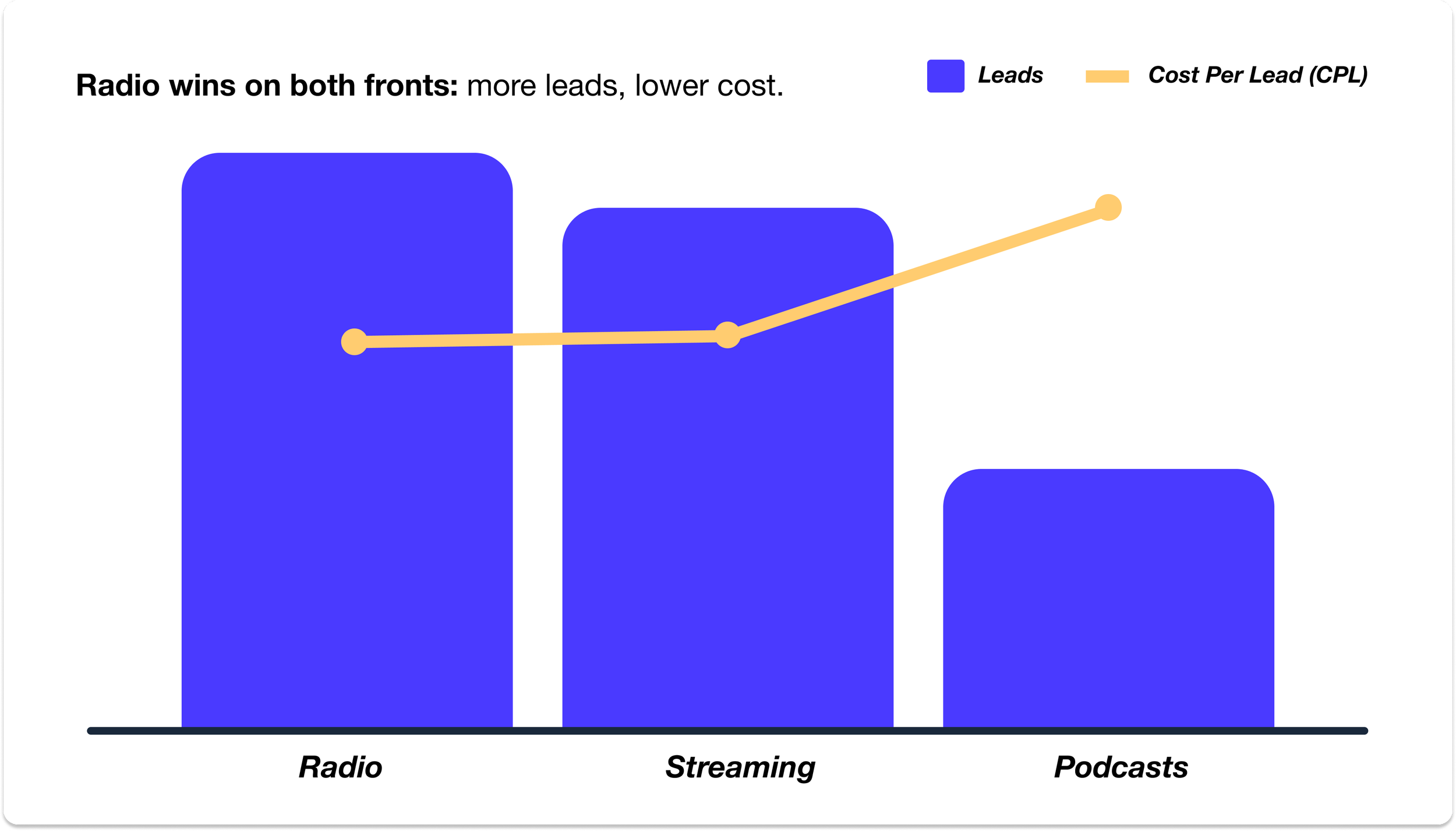
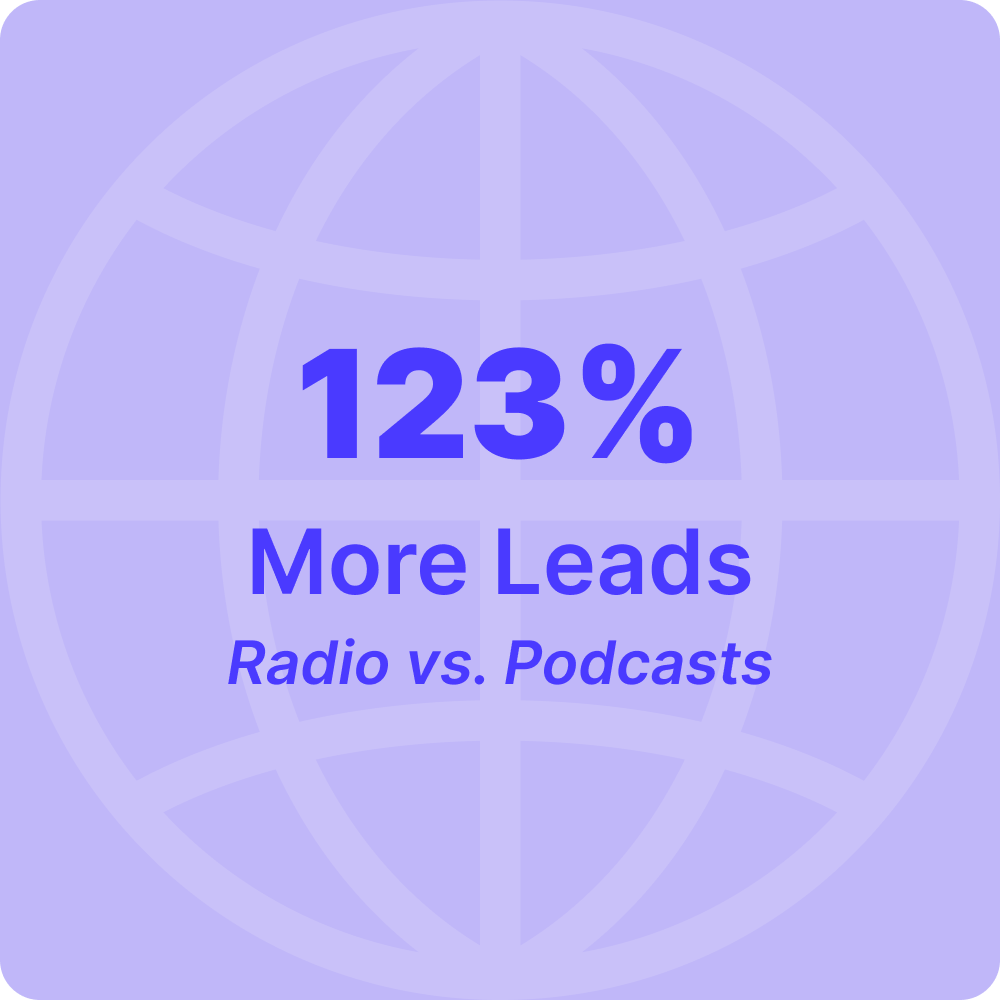
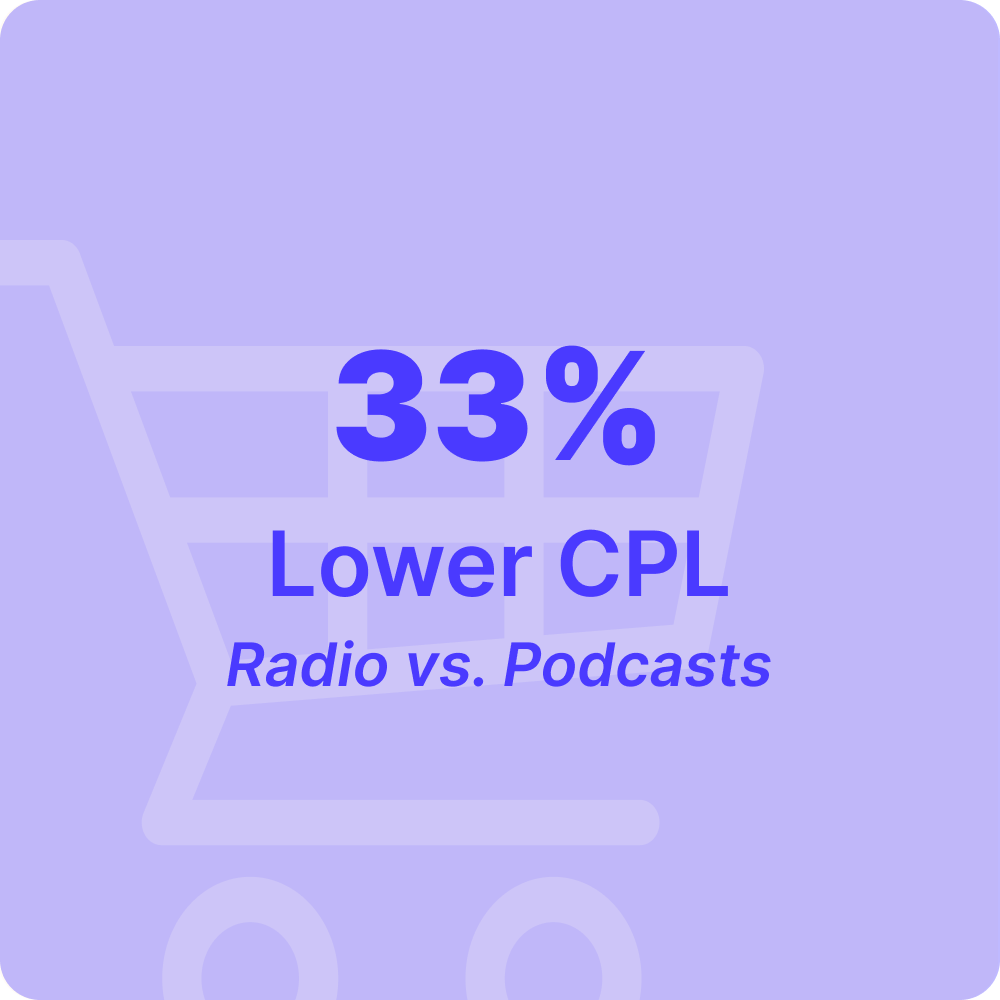
Lead gen program: Radio delivered 10% more leads at a 2% more efficient CPL than streaming, and 123% more leads at a 33% more efficient CPL than podcasts.
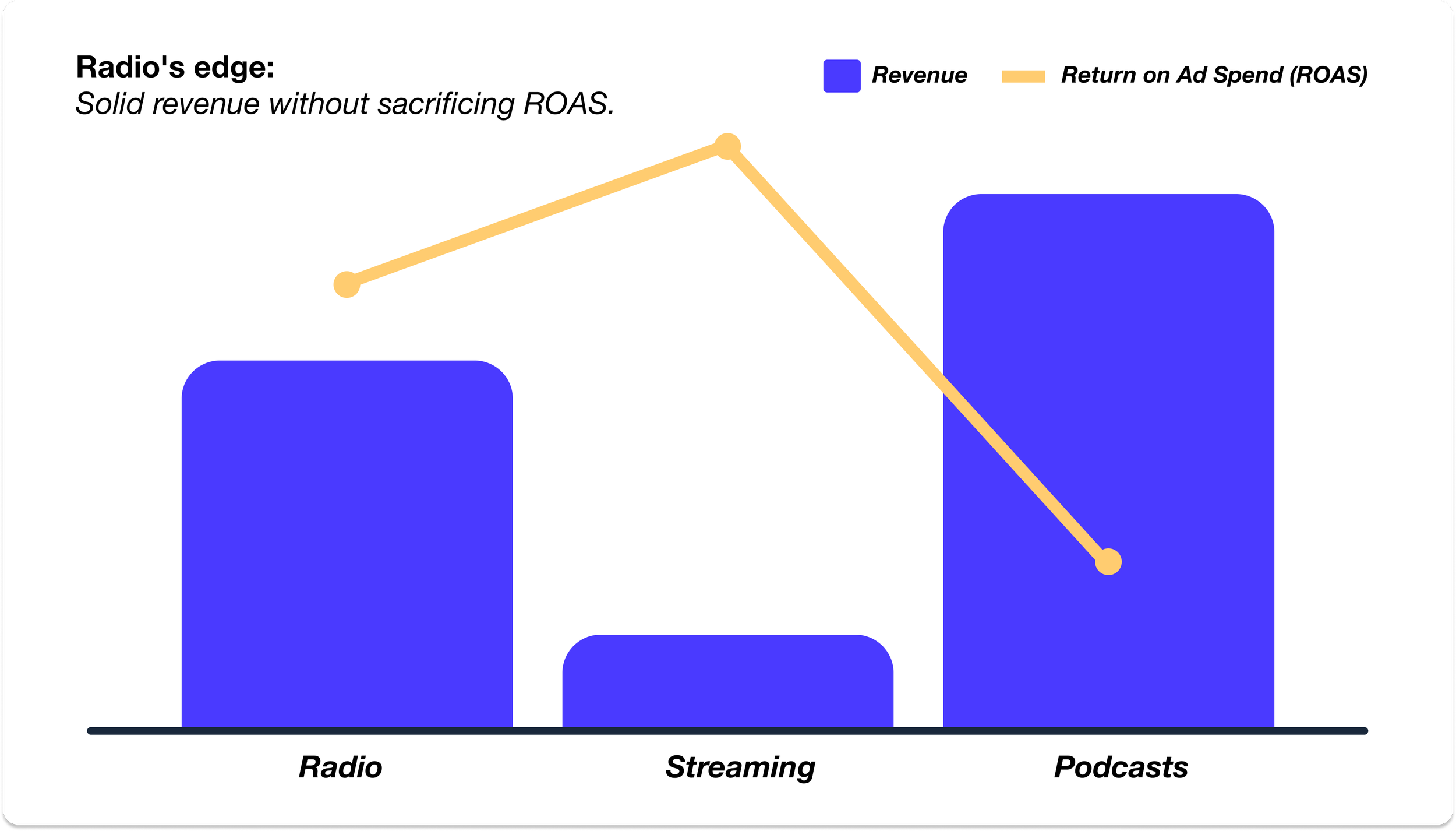
ROAS program: Radio landed in the middle of the three channels on both revenue and efficiency — substantial revenue with strong efficiency from well-optimized placements, while podcasts drove the most revenue at the lowest ROAS and streaming drove the highest ROAS on the lowest revenue.
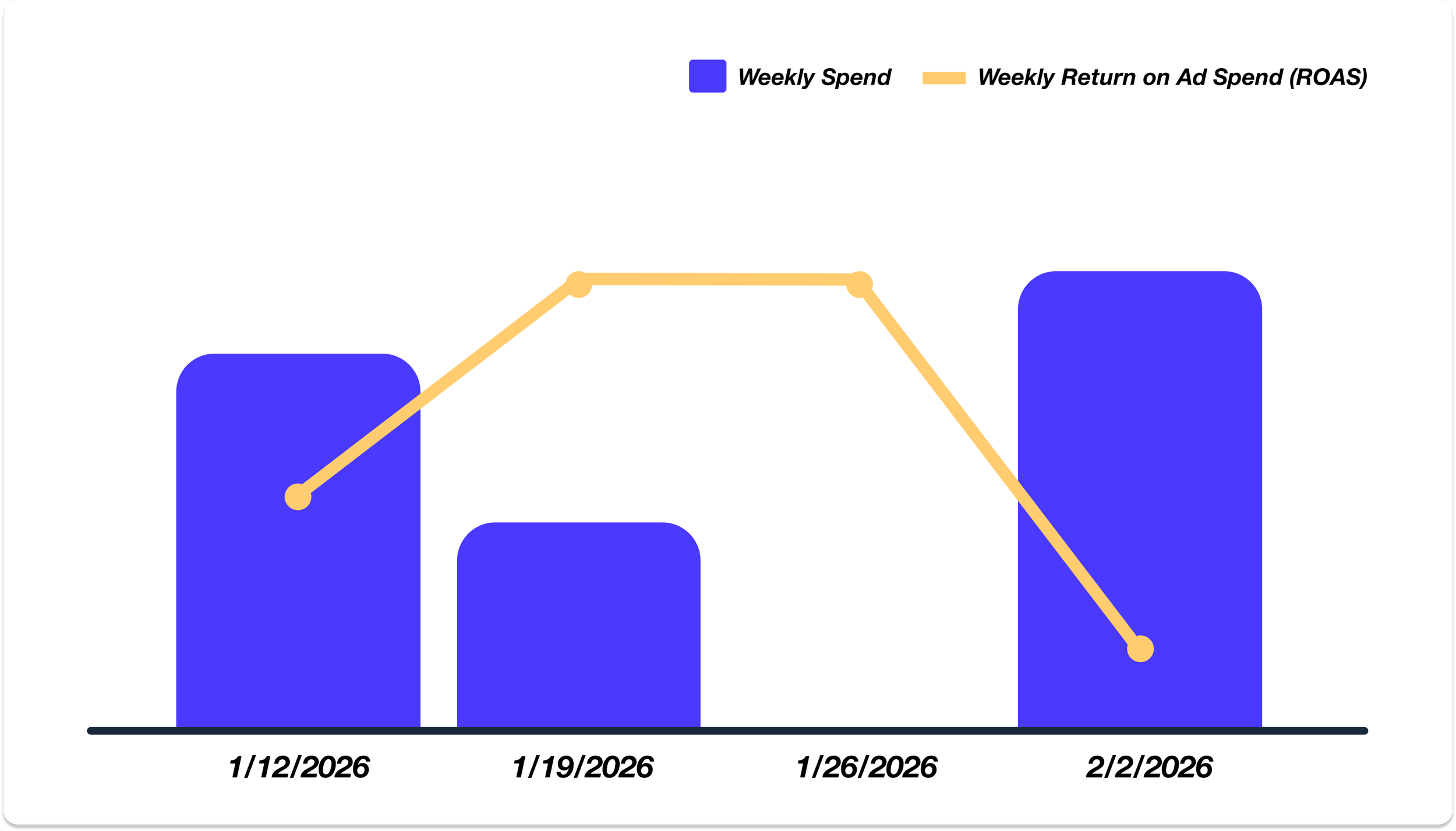
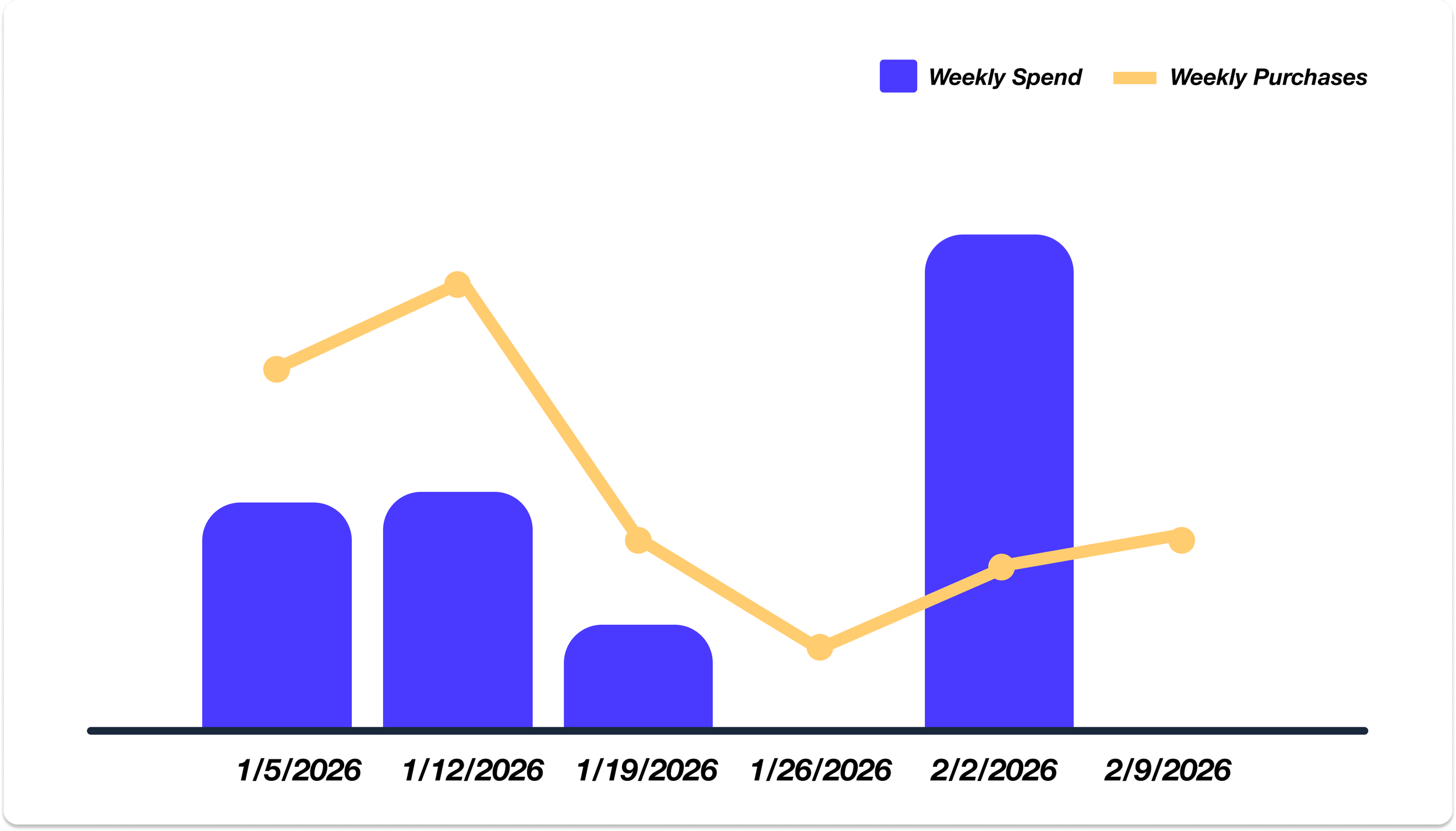
Focused tests: Two advertisers ran only one to two days per week for NFL Playoff campaigns
ROAS program: Strongest week hit 2x the ROAS goal despite radio running only on game days; conversions continued in weeks with no active spend
CPP program: Hit 50% of its purchase goal with just ten days on air across six weeks, with the strongest efficiency in the earliest weeks
Key Learnings:
Satellite vs. terrestrial: One advertiser generated 70% of terrestrial's revenue at 7% of the spend; another saw a 54% lower CPL on satellite than terrestrial
Genre-level: Several music formats hit CPLs at or below blended benchmarks, opening an expansion lane beyond news/talk and sports
DMA-level: A market outside the top 50 matched the results of two of the largest media markets in the country at one-tenth the spend
Why it Worked
Previously, Right Side Up's advertisers were making radio decisions with incomplete data — promo codes and call tracking that missed in-car listeners and late converters, and reporting timelines too slow to act on within a live campaign. That gap forced teams to either overinvest based on gut feel or pull back before radio had a fair shot.
Podscribe's weekly, spike-based measurement closed that gap by capturing the full arc of radio's impact, including the lag effect that legacy tools missed entirely. Layering in creative, genre, and DMA-level detail turned a single "radio" line item into a set of specific, testable levers — satellite vs. terrestrial, music vs. talk, national vs. local. And running the results against Media Mix Modeling independently gave advertisers a second, unrelated system confirming the same story.
What made the difference: treating radio's lag effect as a design requirement rather than an inconvenience, and building reporting granular enough to answer "what works on radio," not just "does radio work."

"For years, the fight was always to get radio onto a media plan to show how powerful a channel it really was. With insights taking so long, advertisers often pulled the plug early and pivoted to channels where they could get results faster. Not only can we get those results from radio just as quickly, but Radio, Podcast, and Streaming results can all live in one platform with Podscribe."
The Bottom Line
Measure radio on the same cadence and rigor as podcast and streaming audio — weekly, spike-based reporting surfaces performance that promo codes and call tracking miss, especially from in-car and late-converting listeners.
Don't treat "radio" as one line item. Satellite, terrestrial, genre, and DMA all perform differently — granular reporting is what turns a blended average into a real optimization plan.
Validate independently. Running radio attribution against MMM — and having the two agree — is what turns internal skepticism into confidence to scale.
Read more about Radio Attribution →
Ready to start measuring radio?
Bring the same rigor, cadence, and confidence to radio that you already expect from podcast and streaming audio — with weekly, spike-based reporting and independent MMM validation.
Reach out to partnerships@podscribe.com to get started or simply book a demo using the form below.

About RightSideUp
Right Side Up is a premium marketing talent platform built to help ambitious companies grow. They connect high-performing organizations with A+ marketers across every channel and specialty—deploying top talent as individual consultants, custom agency teams, or full-time hires through their recruiting services. Since 2017, they've helped more than 1,000 early-stage ventures, high-growth startups, and Fortune 500 brands like Calm, Rocket Money, and Zenefits hit their goals. Learn more at www.rightsideup.com.
